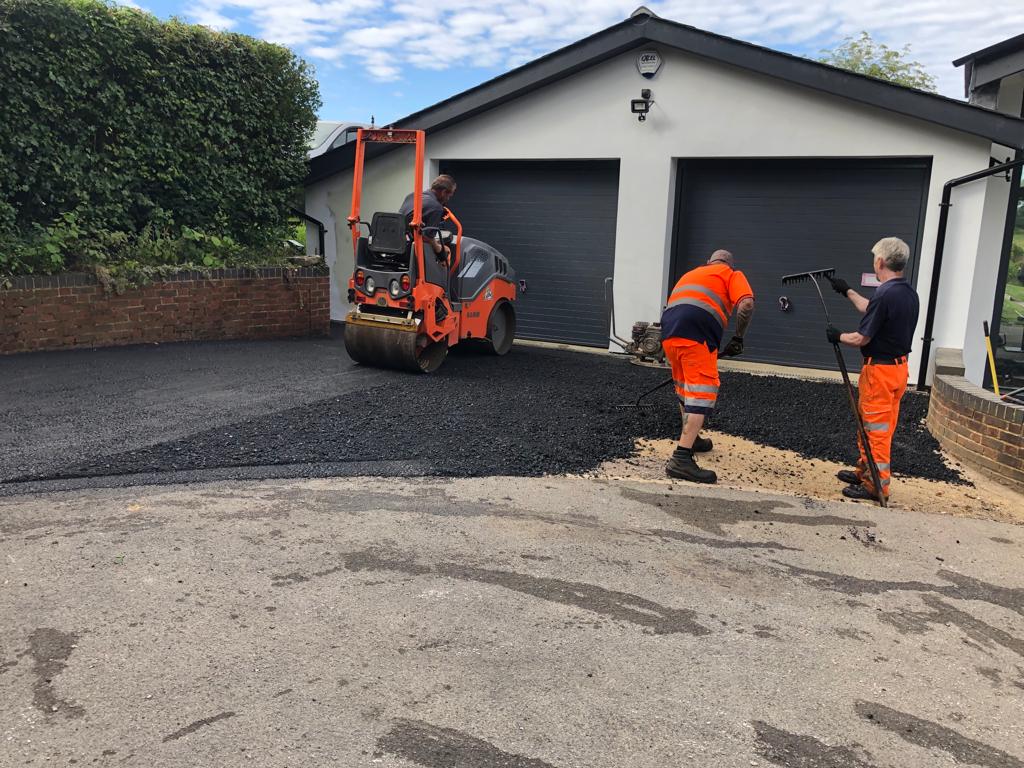
An asphalt entrance often experiences some of the greatest stresses across a driveway, access road or commercial vehicle area. Vehicles repeatedly brake, turn and accelerate at the same point, while the edges of the pavement can be exposed to additional loading and water movement. Over time, this concentrated use can lead to cracking, potholes, depressions or surface breakdown around the entrance even though the asphalt further into the property remains in good condition.
The good news is that a damaged entrance does not automatically mean the entire asphalt surface needs replacing. Where deterioration is localised and the surrounding pavement remains structurally sound, targeted asphalt repairs can often restore the affected area while retaining the serviceable pavement around it. At Forbes Road Tek, we provide professional asphalt and bitumen surfacing services throughout Forbes, NSW, with repairs based on the actual condition and cause of pavement damage.
Why Do Asphalt Entrances Deteriorate?
The entrance to an asphalt surface experiences different forces from areas where vehicles simply travel in a straight line.
As vehicles enter or leave, tyres may turn while moving slowly, brake before reaching the entrance or accelerate immediately afterwards. These movements create concentrated forces across a relatively small area of pavement.
Common factors contributing to entrance deterioration include:
- Frequent turning movements
- Braking and acceleration
- Heavy vehicle traffic
- Weak pavement edges
- Water infiltration
- Poor drainage
- Inadequate support beneath the asphalt
- General surface ageing
Understanding which factors are responsible is essential before selecting a repair method.
When Can the Entrance Be Repaired Locally?
Localised repair can be appropriate when damage is limited to the entrance and the surrounding pavement remains stable.
Examples can include:
- One or two potholes
- A damaged pavement edge
- Localised cracking
- A small sunken section
- Surface deterioration confined to the entrance
- Isolated damage caused by concentrated traffic
The damaged material can be removed and the affected section properly prepared before new asphalt is installed.
The objective is not simply to cover the damaged area. A successful repair needs suitable support underneath and a sound connection with the existing pavement.
The Surrounding Asphalt Needs to Be Assessed
Before deciding that only the entrance requires repair, it is important to inspect the pavement beyond the obvious damage.
Cracks extending away from the entrance, widespread depressions or numerous deteriorated sections may indicate that the problem is broader than it first appears.
A professional assessment looks for signs such as:
- Cracking extending into surrounding pavement
- Loose or crumbling asphalt
- Changes in surface level
- Multiple previous repairs
- Movement under vehicle traffic
- Water collecting across a larger area
If the rest of the pavement remains in good condition, retaining it can be a sensible approach.
Potholes May Require More Than Filling
Potholes commonly appear around vehicle entrances because these areas receive concentrated traffic stresses.
However, a pothole is often the final stage of deterioration rather than the original problem.
Water may have entered through cracks or damaged edges and weakened the supporting pavement. Repeated vehicle movements then cause the asphalt above to flex and break apart.
For a more dependable repair, it may be necessary to remove deteriorated material and investigate the condition underneath rather than simply filling the visible opening.
Weak Edges Can Cause Entrance Failure
Pavement edges require adequate support.
At an entrance, vehicles may regularly cross close to the asphalt edge or approach the surface at an angle. If the edge is poorly supported, it can begin cracking and breaking away.
Once deterioration starts, exposed sections can allow additional moisture into the pavement and the damage may gradually spread further into the asphalt.
Repairing the entrance may therefore involve restoring both the asphalt and the support around vulnerable edges.
Drainage Should Be Checked Before Repairs Begin
Water management is particularly important around driveway and property entrances.
Different pavement levels can cause rainfall to collect or flow across the entrance. If water continually enters cracks or runs alongside damaged edges, repairing the asphalt without addressing the drainage problem can allow deterioration to return.
Warning signs include:
- Puddles forming near the entrance
- Water running through damaged areas
- Sediment collecting in low sections
- Erosion beside pavement edges
- Potholes repeatedly developing after rainfall
Where drainage is contributing to the damage, it should form part of the repair strategy.
Sunken Areas May Indicate a Base Problem
A depression at an asphalt entrance can indicate that the supporting material beneath the surface has moved or lost stability.
Simply placing additional asphalt over the depression may not provide a lasting correction if movement continues underneath.
The affected area may need to be opened so unstable material can be addressed before the asphalt surface is restored.
This is why the condition below the visible pavement matters just as much as the asphalt itself.
Can a New Section of Asphalt Join the Existing Surface?
Yes. Localised asphalt repairs can be integrated with existing pavement when the surrounding material remains suitable.
The repair area needs to be properly defined and prepared so the new asphalt can form a stable transition with the retained surface.
Attention should be given to:
- Removing failed material
- Preparing stable edges
- Correcting underlying weaknesses
- Establishing suitable levels
- Compacting the repaired area
- Creating an appropriate transition to existing asphalt
Careful workmanship helps the repaired entrance function as part of the wider pavement rather than as an isolated patch sitting over unresolved damage.
When Might Resurfacing Be More Appropriate?
There comes a point where repeated localised repairs may no longer be the best solution.
If entrance damage occurs alongside widespread pavement deterioration, resurfacing may deserve consideration.
Indicators can include:
- Extensive cracking
- Numerous patches
- General surface wear
- Multiple potholes
- Increasing roughness
- Deterioration extending well beyond the entrance
Where the underlying pavement remains structurally suitable, resurfacing can renew a larger area and provide a more consistent wearing surface.
When Could More Extensive Reconstruction Be Required?
Neither patching nor resurfacing can permanently correct substantial foundation failure.
If the entrance has deep structural deterioration, severe settlement or widespread instability beneath the asphalt, the affected pavement layers may need reconstruction.
Signs of deeper problems can include:
- Repairs repeatedly failing in the same location
- Significant depressions
- Severe deformation
- Extensive interconnected cracking
- Noticeable pavement movement
- Persistent drainage-related deterioration
The important point is that reconstruction does not automatically mean replacing every section of asphalt across the property. The extent of work should be determined by how far the structural failure actually extends.
Why Repeated Repairs Should Be Investigated
If the same entrance has already been repaired several times, continuing to patch the visible damage without further investigation may produce the same result.
Recurring deterioration usually indicates that a contributing factor remains unresolved.
This could involve:
- Foundation weakness
- Drainage
- Inadequate edge support
- Traffic loading
- Movement beneath the asphalt
Identifying the cause allows the repair to address more than the symptoms.
Early Repairs Can Protect the Remaining Surface
One advantage of dealing with entrance damage promptly is the opportunity to protect asphalt that is still performing well.
Cracks and broken edges can allow moisture into neighbouring pavement. Traffic can also enlarge potholes and break additional material away from the damaged section.
Repairing localised deterioration before it spreads can help preserve more of the existing surface and reduce unnecessary disruption to otherwise serviceable pavement.
Professional Assessment Helps Determine the Extent of Work
The decision between localised repair, resurfacing and more substantial reconstruction should be based on pavement condition rather than the appearance of one damaged section alone.
At Forbes Road Tek, we assess asphalt and bitumen surfaces throughout Forbes, NSW with attention to the damaged area, surrounding pavement, foundation condition, drainage and expected traffic. This allows the work to be matched to what the surface genuinely requires.
Where sound existing asphalt can remain, there is no reason to treat it as failed simply because one entrance has deteriorated.
Conclusion
A damaged asphalt entrance can often be repaired without replacing the entire surface, particularly when deterioration is localised and the surrounding pavement remains structurally sound. Potholes, edge damage, cracking and isolated depressions can potentially be repaired by removing failed material, correcting underlying weaknesses and restoring the affected section with properly installed asphalt.
The key is identifying why the entrance failed. If poor drainage, weak foundations or insufficient edge support are responsible, those problems should be addressed as part of the work rather than simply covering the visible damage.
For property owners and businesses in Forbes, NSW, Forbes Road Tek provides professional asphalt repairs, bitumen surfacing and resurfacing solutions tailored to the condition of each pavement. If your property entrance is deteriorating while the surrounding surface remains serviceable, our experienced team can assess the damage and recommend a practical repair approach focused on restoring reliable, long-term access.
Call us on: 02 5839 3400
Click here to find out more about Forbes Road Tek
Click here to complete our contact form and see how we can help with your Asphalt and Bitumen Surfacing needs.